Current Trends

Did you notice that skeletons and other things that go bump in the night started creeping onto store shelves at the end of July this year? Yes, it seems a bit early, but for a lot of people, jump scares can’t come soon enough.
It’s a reminder that creative costumes will fill our neighborhoods, and literally tons of sweet treats will be purchased and handed out to candy bags.
Of course, unlike the spooky things themselves, everything that goes into Halloween is easily explained. It has to come from somewhere, and that somewhere is a manufacturing facility.
Ah Yes, the Ole’ DIY Projects
That’s right! It’s time to open the craft bins and unleash your creativity. Halloween is one of the most popular holidays for DIYers. Personalized tombstones, customized skeletons, handmade lights, and other decorations are unmatched by the store-bought items.
Let’s Start with the Most Popular Material: Plastic
How else could you turn an empty plastic container into a ghost, or PVC pipe into a giant grim reaper for your front lawn? None of it is possible without manufactured materials.

It’s going to be hard to take this seriously, but stay with me: plastics start with nurdles. No, I’m not kidding! Nurdles are the key to manufacturing plastic products. These tiny plastic pellets turn into everyday items.
To tell the whole story, we have to begin at the oil and gas fields. Plastic can’t be made without the hydrocarbons found in crude oil and natural gas, which are its building blocks. The gases are broken apart, or “cracked,” into small molecules. Then scientists take over, and nurdles are born.
The nurdles’ next journey is to manufacturing facilities, where they are melted down and formed into the items you transform into flashy Halloween decorations.
With demand for plastic products so high, motors and drives have to keep the machines running smoothly so no one has to give up the ghost. Variable frequency drives (VFDs) control motor speed on extruders, injection molding machines, and conveyors, which keeps production steady and saves energy.
Repurpose Those Pool Noodles
Pool noodles serve their purpose in the summer, but they’re also a popular building material for elaborate Halloween decorations.

Once again, let’s head back to the oil fields. Pool noodles are made from polyethylene, another petroleum-based plastic. (Styrofoam, which is expanded polystyrene, is a different material, but it’s born in much the same way, and it’s the foam behind of those yard tombstones) In both cases, manufacturing plants add some science and a gas to puff up the material, and we get the light, airy foam we all know and love.
Whether it’s foam or hard plastic, the key process is melting the material so it can transform into the end product. And where there’s heat, there’s fire, which means there’s also a need for burner management systems and temperature and process controllers. These keep every heating zone at precisely the right temperature, and they shut things down safely if something goes bump in the night.
What About All That Candy?
Our buckets full of Halloween candy didn’t magically appear with the wave of a witch’s wand.
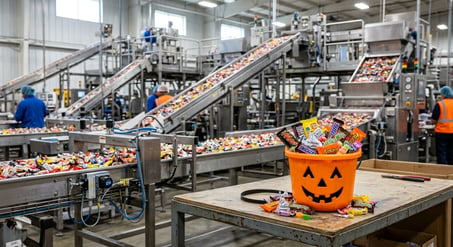
Candy making is a delicate science. Sugar, corn syrup, and flavorings are cooked to exact temperatures, and a few degrees can be the difference between a perfectly chewy caramel and a sticky disaster. Chocolate has to be carefully heated, cooled, and re-warmed, a process called tempering, to get that glossy finish and satisfying snap. Once again, temperature controllers and process controllers do the work to make sure every batch comes out right.
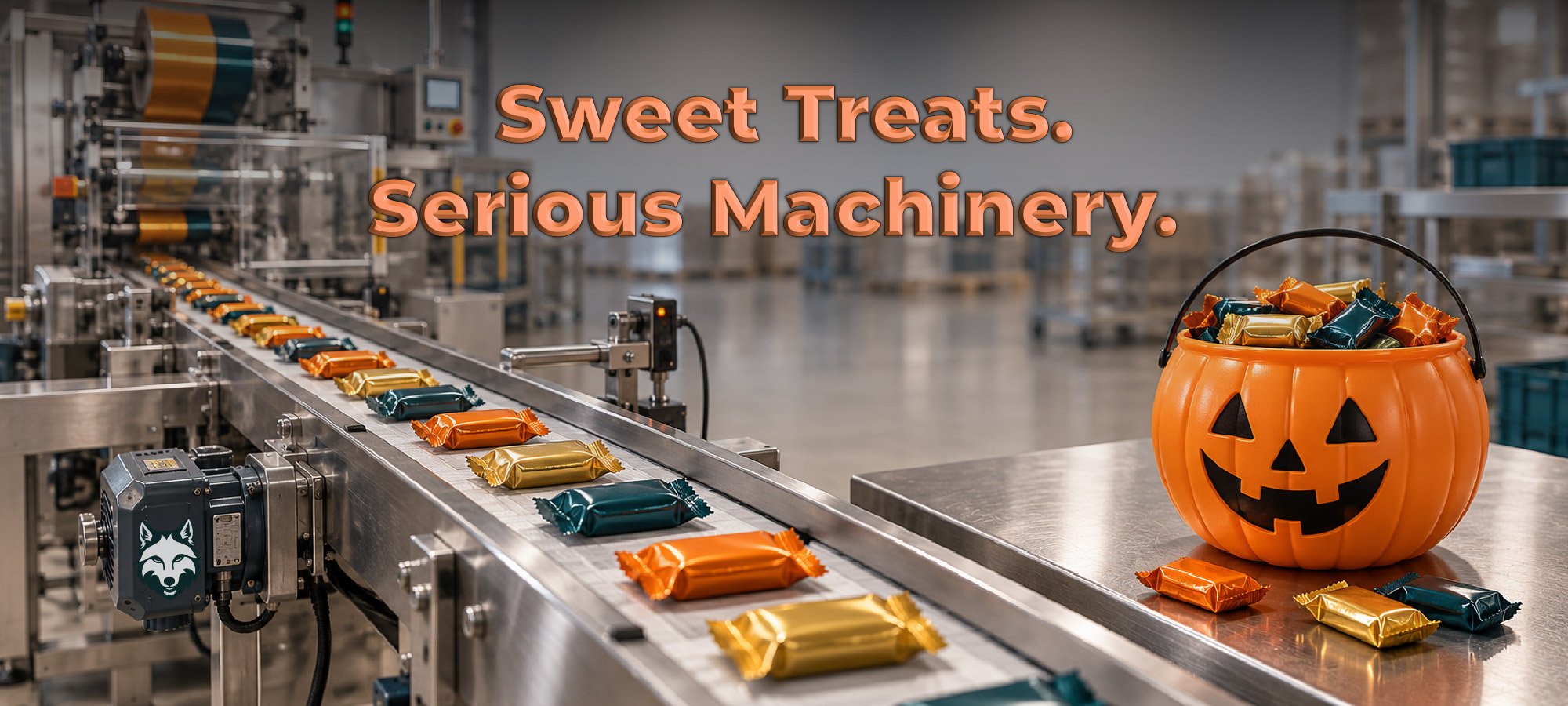
From there, the candy is poured into molds, cut, coated, and sent down the line. Motors, drives, and sensors keep the conveyors moving at the right speed, and sensors count and detect every piece. Automated packaging machines then wrap thousands of fun-size bars per minute, and each of those machines depends on reliable controls to get your favorite treat from the factory to your candy bag.
And the Costumes and Lights?
Those creative costumes begin as fabric, thread, and plastic accessories, produced by textile mills, cutting machines, and sewing lines that run on precisely controlled motors. The glowing eyes in your yard haunt and the flickering string lights come from electronics plants, where automated assembly equipment keeps every tiny LED in line.
Keeping the Magic Behind the Scenes
So the next time you hang a plastic spider, stack a pile of foam tombstones, or dig through a bowl of candy, remember the long, winding path each item took to reach you: from oil field to nurdle, from sugar to wrapper, and through a whole lot of automation along the way.
Feeling crafty? Let us know what your production line needs.
More Inspiring Pages