Industry Focus

Did you know that the oil and gas industry provides more than half of the energy we use around the world? And while you might think of oil and gas as the stuff that fuels your car or heats your home, that's only part of the story.
From plastics and fertilizers to synthetic fabrics and medical equipment, oil and gas-derived materials are connected to more parts of our everyday lives than most of us probably realize.
With that kind of demand, the industry is constantly evolving. Companies are investing in cleaner technologies, including carbon capture and storage, while incorporating renewable energy sources to help power operations.
But no matter how the industry evolves, one thing remains important: keeping people, equipment, and processes safe.
And that means choosing automation components that are designed for the environment where they're going to work.
It’s Not Just Oil and Gas
Here's where things get interesting.
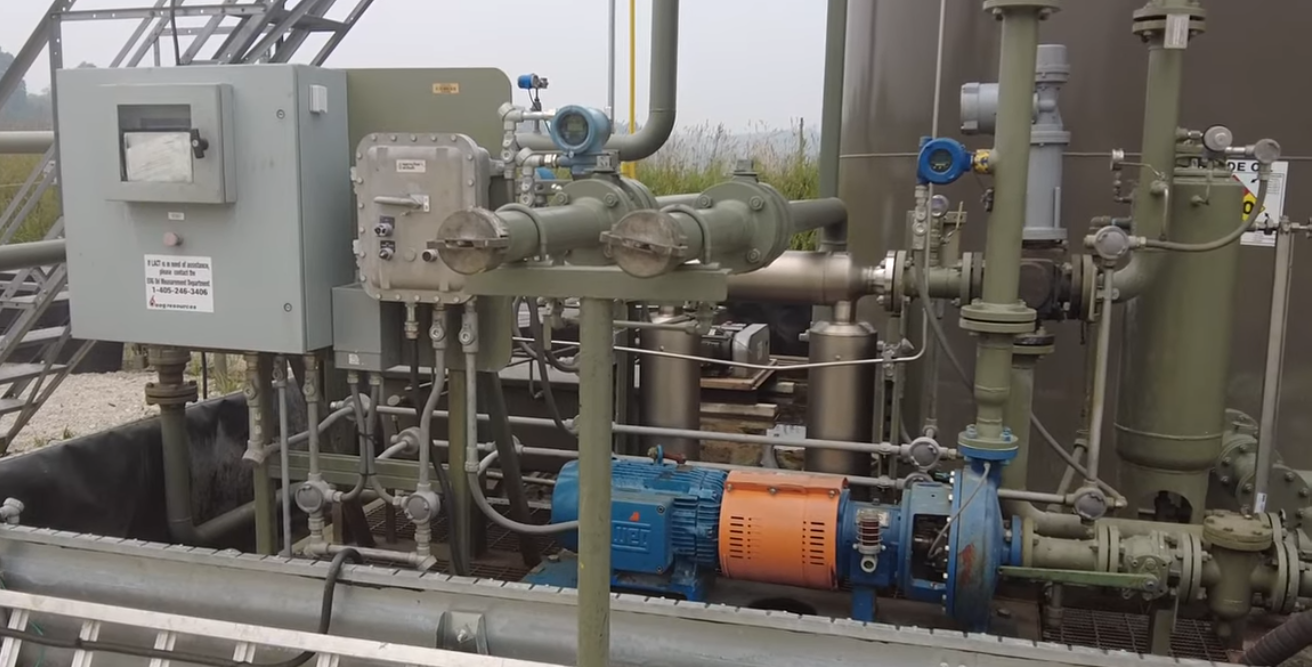
You can visit two oil and gas production facilities and find that they look completely different. That's because there isn't a one-size-fits-all setup for producing oil and gas.
The design of a facility depends on the characteristics of the wells and what they're producing. What is the pressure? How much volume is being produced? What's in the mix? Is it primarily oil or gas? Is there a significant amount of water?
All of these factors influence how a facility is designed and, in turn, what types of equipment are needed.
That includes the automation equipment responsible for monitoring, controlling, signaling, and protecting the operation.
And when you're working around potentially flammable gases, vapors, and other hazardous conditions, you can't exactly throw any old component into the panel and hope for the best.

Welcome to the Nitty Gritty
Oil and gas facilities aren't exactly the place for your average off-the-shelf electrical component. Depending on what's being produced and what's floating around the facility, there may be gases or vapors that can turn an ordinary electrical spark into a very bad day.
This is where terms like explosion-proof, hazardous location, and intrinsically safe start making their way into the conversation.
The goal isn't simply to find a component that can do the job. It's to find a component that can do the job in that environment.
Think of it this way: Your automation equipment already has a job. In Oil & Gas, it may also have to deal with heat, moisture, chemicals, vibration, outdoor conditions, and potentially hazardous atmospheres.
That's a lot to put on one little component.
The Heavy Hitters - Gas Detection & Visual Alarms
When you're dealing with potentially hazardous gases, knowing what's happening in the environment is critical.
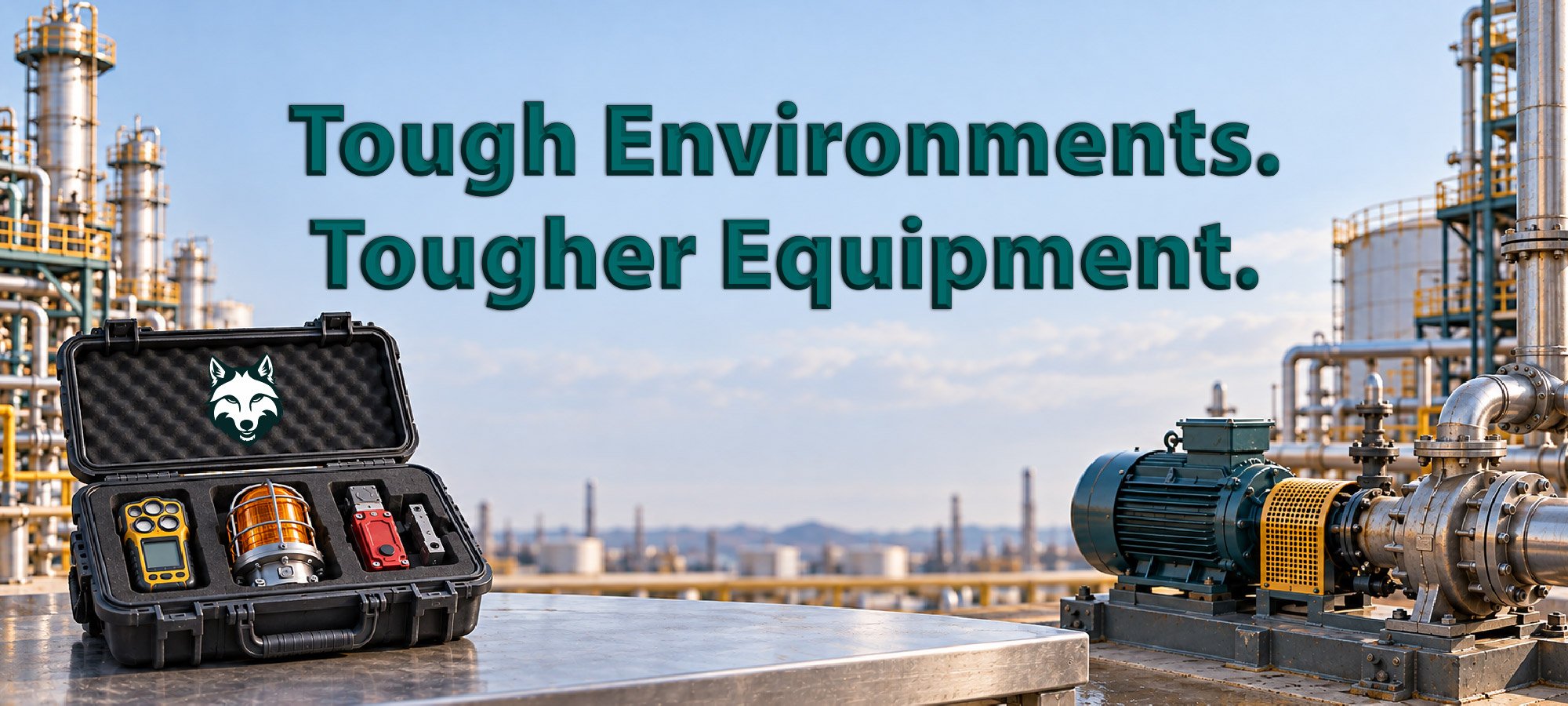
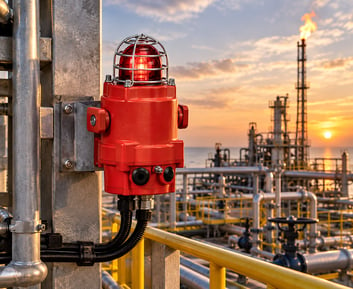
Gas detection systems can help identify the presence of hazardous gases, while audible and visual signaling devices can help communicate an alarm condition to personnel.
Motors Built for the Environment
Motors are doing some serious heavy lifting in Oil & Gas applications, so selecting one isn't just about horsepower.

The TECO EQ7 and WEG XP NEMA motors are examples of motor solutions that can be used in demanding industrial applications where right hazardous-location ratings and specs matter.
Because when your motor is working in an environment where the surrounding atmosphere matters, “it spins” isn't quite enough.
HMIs: Because Someone Still Has to Talk to the Machine
Even in a rugged Oil & Gas environment, operators still need a way to interact with the equipment.
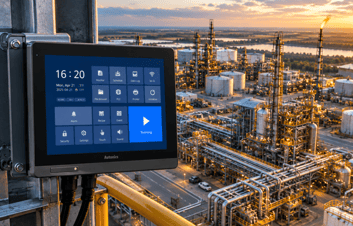
Using an HMI provides an interface for monitoring and controlling processes, giving operators a way to see what's happening without having to interpret a collection of blinking lights and mysterious buttons.
Of course, like any equipment used in a hazardous location, the right HMI and installation should to be selected based on the application and required certifications.
Transformers That Can Handle the Environment
Transformers may not be the flashiest component in a control system, but they play a huge role in getting the right power where it needs to go.
Hazardous-location transformers, are designed for applications where a standard transformer just won't cut it. They provide power for control equipment while being built to handle harsh environments.
Sometimes the quiet components are doing some of the most important work.
Safety Switches Where They Matter
Sometimes keeping people and equipment safe comes down to knowing whether something is open, closed, in position, or where it should be.
Safety Switches and ATEX-rated position switches provide options for monitoring equipment and access points in hazardous environments.
Because when a machine, enclosure, door, or guard needs to be monitored, “Is it actually closed?” is a pretty important question.
The Takeaway
Oil and gas facilities aren't all built the same. The equipment used in one location may not be the right fit for another, and the environment plays a major role in determining what components belong in the application.
That's why selecting automation equipment shouldn't stop at horsepower, voltage, or communication protocol.
Where is the equipment going? What will it be exposed to? What hazardous-location requirements apply? What certifications are required?