Brand Spotlight


“Ever wonder why a certain seat in your house is sometimes called a throne? Maybe it’s because that particular piece of furniture sits atop an underground kingdom—a kingdom we call our sewer system.” – Mike Rowe, Dirty Jobs
There are so many day-to-day activities we do with an out of sight, out of mind mentality. When we do laundry, wash dishes, flush the toilet, or even unintentionally litter and send garbage down sewer drains, we rarely think about the toll these actions take on wastewater pumps.
These pumps sit in wells, lift stations, and treatment plants just trying to do their job—until humans intervene and flush down a few hundred thousand “flushable” wipes that knock their operations off course.
It’s all “oh well” until there’s an “oh crap!” when the pump fails.
Making It Go Away
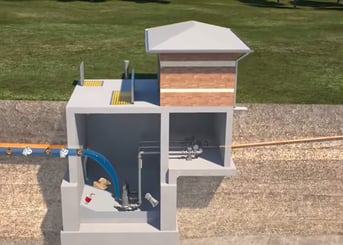
Here’s what wastewater pumps really do that no one talks about: they move the stuff nobody wants from Point A (your house or facility) to Point B (not your problem anymore). Sewage, sludge, waste—whatever you want to call it—these pumps handle it with minimal complaint.
You’ve probably heard the saying “it all flows downhill.” And most of the time, that’s literally what happens with every flush, shower, and dishwasher cycle. But when gravity alone can’t do the job, pumps step in. They’re there to catch it and keep things moving along. Otherwise, we’d be dealing with a hazmat nightmare in our streets and backyards.
The Real Cost of Pump Failure
Responsible for roughly 300 million gallons of water a day, a wastewater pump failure is an immediate crisis. Sewage backup isn’t just gross; it’s also a public health concern and comes with costly emergency repairs.
Of course, the pump isn’t doing this job alone. Behind the scenes, a control panel keeps everything running smoothly and makes sure the pump operates when it’s needed—and shuts down before things get out of hand.
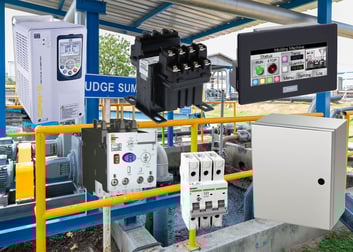
Inside that panel are a ton of parts working together. A circuit breaker protects the system from electrical faults, while motor starters or VFDs control how the pump starts and runs. Overload relays monitor the motor and shut things down if it begins working harder than it should. A control power transformer steps down incoming voltage so the control components can operate safely, and a PLC makes the decisions for the system, based on signals coming from the field.
Wastewater pumps are built tough, but sometimes they end up dealing with things they were never meant to handle. Despite the label, many “flushable” items really aren’t pump-friendly. Instead of breaking down like toilet paper, they stick together, wrap around impellers, and clog up systems.
Flushable wipes are the biggest offenders. They may disappear down the drain easily, but inside a lift station they can form rope-like tangles that jam pumps and stop them in their tracks.
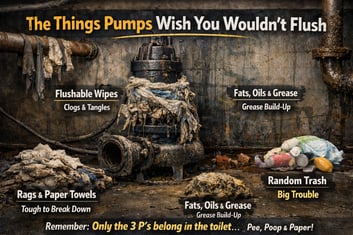
Then there are rags and paper towels. Unlike toilet paper, these materials are designed to stay strong when wet—which means they don’t break apart once they reach the sewer system.
And we can’t forget FOG: fats, oils, and grease. When poured down drains, grease cools and hardens inside pipes and equipment. Over time, it builds up into thick blockages that restrict flow and force pumps to work harder than they should.
Add in the occasional plastic item, hygiene product, or random piece of trash, and suddenly that hardworking pump is dealing with a lot more than wastewater.
Wastewater operators often sum it up with a simple rule: only the three P’s belong in the toilet—pee, poop, and (toilet) paper. Unfortunately for pumps everywhere, that rule isn’t always followed.
Love the Pump You're With
Look, we get it. Wastewater isn't glamorous. But the pumps, motors, drives, and controls that keep it moving? They deserve some respect.
They work in the worst conditions. They handle what nobody else wants to touch. They keep our communities clean, our water safe, and our facilities compliant.
So here's to the pumps in the dark, wet places. You're doing important work. And we've got the parts, automation, and expertise to keep you running.