Brand Spotlight
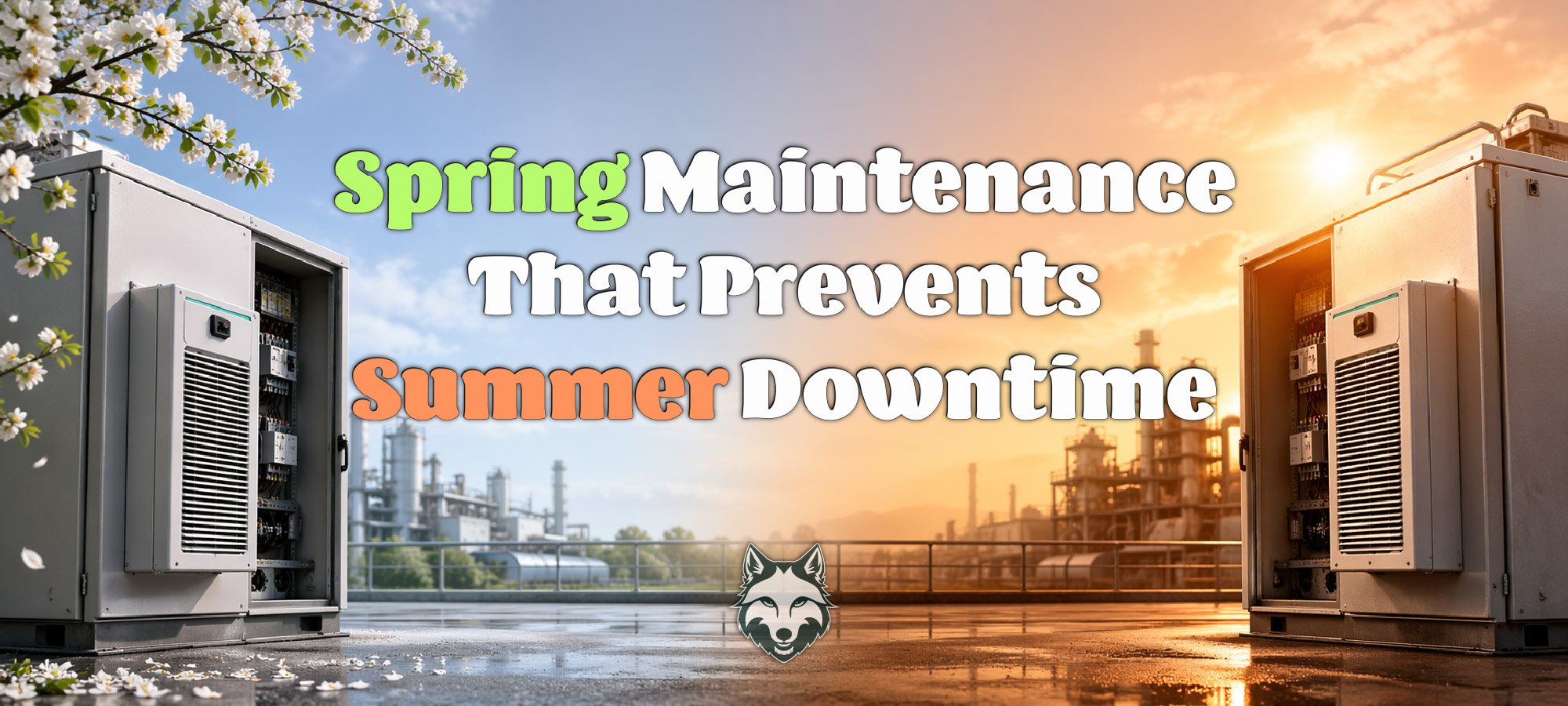

When most people think of spring cleaning, they picture garages, closets, and maybe finally tackling that junk drawer. But in the world of industrial automation, spring cleaning means something a lot more critical: protecting the equipment that keeps your operation running.
As temperatures rise, your enclosure cooling systems go from “nice to have” to “mission critical.” A little seasonal maintenance now can prevent overheating, downtime, and expensive failures later.
Here’s how to get your cooling units summer-ready—without turning it into a full-blown overhaul.
Step 1: Don’t Let Your Thermostat Slack Off
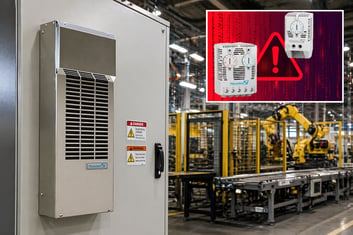
Your Pfannenberg thermostat plays a simple but crucial role: it decides when your filterfan turns on.
If it’s stuck, drifting out of calibration, or slow to respond, your fan might kick on too late—or not at all. And in the summer heat, that delay can mean rapidly rising enclosure temperatures.
Quick check:
Manually trigger the thermostat and verify the fan responds immediately. If it hesitates or doesn’t activate, it’s time to troubleshoot or replace it.
A lazy thermostat might not seem like a big deal in April—but by July, it can be the reason your system overheats.
Step 2: Swap Out Your Filter Media (Yes, All of It)

Inside every Pfannenberg filterfan is a foam or polyester filter doing the dirty work—literally.
It’s your first line of defense against dust, debris, and airborne contaminants. But over time, that same filter becomes the problem:
Spring is the ideal time to replace the entire filter pack, not just inspect it.
Think of it this way: a clogged filterfan doesn’t just underperform—it actively works against your system
Step 3: Evaluate Your Cooling Capacity (It Might Be Time to Upgrade)
If your PF Series unit has been in service for more than five years—or if your enclosure has been running warmer than usual—it’s worth taking a closer look.
Cooling technology has improved, and newer systems deliver noticeable gains in both efficiency and noise reduction.
For example, Pfannenberg’s 4.0 generation filterfans offer:
A Size 6 unit (291mm) delivering up to 560 CFM can handle even high-heat applications with ease.
Sometimes, spring cleaning isn’t just about maintenance—it’s about modernization.
Final Thought: A Little Maintenance Now Beats a Lot of Downtime Later
Summer doesn’t wait—and it doesn’t go easy on industrial equipment. Taking the time to inspect, replace, and evaluate your cooling setup now can mean the difference between smooth operation and unexpected shutdowns when temperatures peak.
Because in industrial environments, “spring cleaning” isn’t about appearances—it’s about performance.