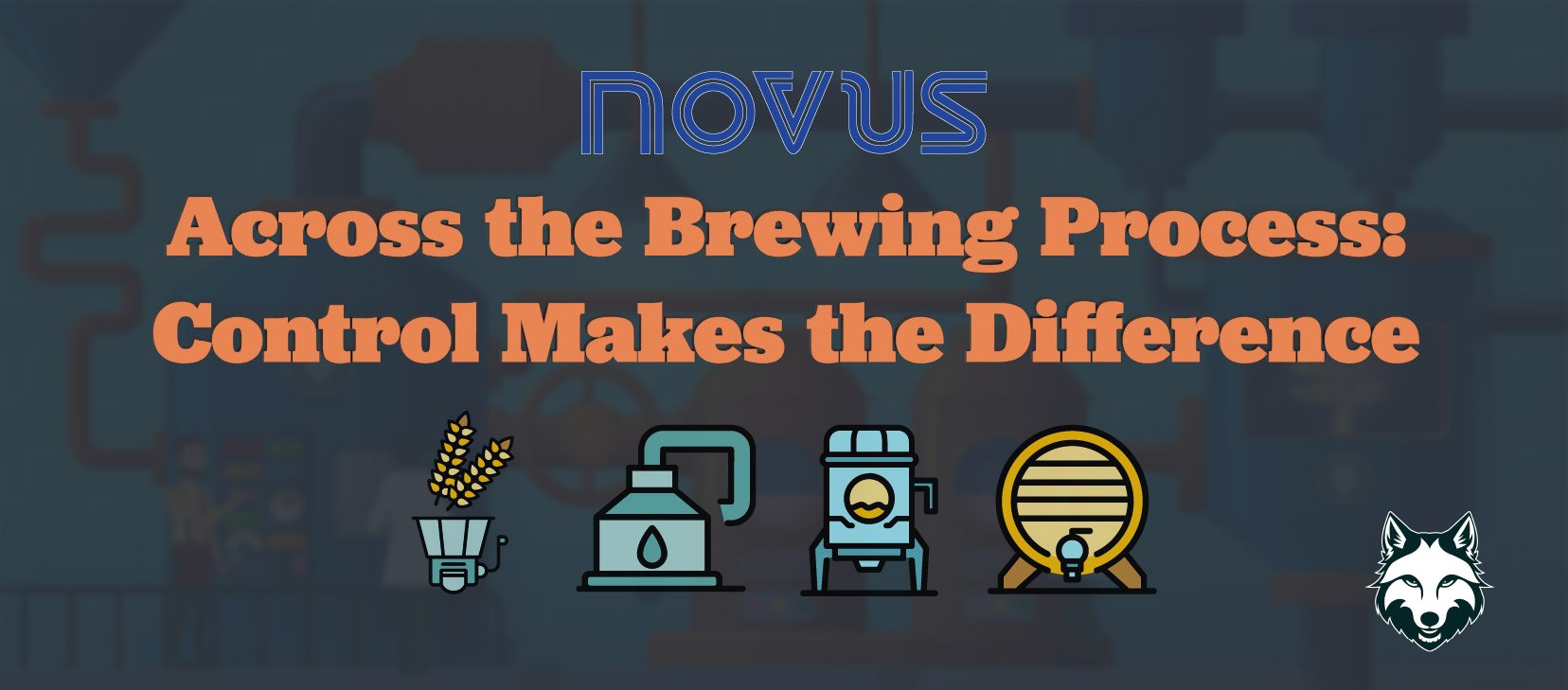
Did You Know About Novus Brew?
“I don’t want to brag, but if it’s about breweries, you’re talking to the right people!”
—Guilherme Carvalho, Market Specialist, Novus Automation

Our message to Guilherme: Please, brag away—we want to hear all about it! We’d also like to thank Guilherme for sharing this unique insight with us, along with the details about what Novus can offer for every part of the brewing process. In addition to providing solutions for every stage of the brewery operation, Novus has partnered with Alcapone Brewery in Brazil to create a Novus beer.
Shared from Novus Automation:
Brewing Process — What to Control, What to Avoid, and Where NOVUS Helps
To deliver consistent, high-quality beer, each stage must hit its temperature, time and sequencing targets. Here’s the common steps across the key steps and risks, and the NOVUS devices that add control/traceability.
0) Malting & Milling
Role: Prepare malt and break kernels to expose starch/enzymes.
Control focus: Usually mechanical; no closed-loop temperature control here.
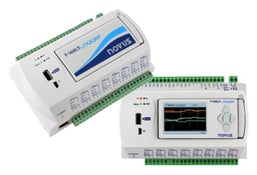
NOVUS fit: Optional monitoring only. If you want trend data (ambient temp/humidity around milling or silo – or level with many options in the market), FieldLogger and TxBlock-USB are good options to add temperature probes to hoppers or mills.
1) Mashing: Why it matters: Enzymes convert starch to fermentable sugars. Holding the right steps (typically 62–68 °C) drives body, attenuation and flavor.
What to avoid:
- Too hot → enzymes denature early (poor conversion).
- Too cold → incomplete conversion, off-flavors.
NOVUS fit:
- N20K48 (PID or ON/OFF) to hold mash temperature with SSR for electric elements.
- N321R if simpler heat/cool control is needed (glycol jackets).
- TxBlock-USB when the temperature sensor is far from the controller (clean 4–20 mA loop).
- FieldLogger to monitor temperatures and timers (recipe reproducibility).
2) Lautering / Filtration: Why it matters: Separate sweet wort from grain; avoid channeling and stuck mash.
What to avoid: Poor flow or sudden temperature drops leading to efficiency loss.
NOVUS fit:
- FieldLogger to record outlet temperature/flow signals for batch analytics.
- TxBlock-USB to condition any RTD/TC sensors near the lauter tun if cable runs are long.
3) Boiling (+ Hop Additions): Why it matters: Sterilization, DMS removal, hot break, and hop isomerization; typically, 60–90 min near 100 °C, depending on altitude
What to avoid:
- Inconsistent boil intensity → variable bitterness/flavor stability.
- Overboil → volume loss/caramelization.
NOVUS fit:
- N20K48 + SSR to regulate kettle power precisely; use one timer for total boil and another for hop schedules.
- FieldLogger to log kettle temp, boil intensity proxy (power %, steam valve), and hop event timestamps.
4) Whirlpool / Clarification (optional but common): Why it matters: Sediment (trub) removal for clearer wort and better heat-exchange efficiency.
What to avoid: Carryover of solids into fermenter.
NOVUS fit:
- FieldLogger to record temperature decay and pump/valve states for traceability.
.
5) Cooling (Heat Exchanger/Chiller): Why it matters: Fast cooldown to pitching range (typically 15–25 °C by yeast strain) limits contamination and preserves aroma.
What to avoid:
- Slow or uneven cooling → infection risk, haze formation, poor fermentation start.
NOVUS fit:
- N321R to command refrigeration valves/pumps; simple and robust for chillers.
- TxBlock-USB to convert RTD/TC at the exchanger to 4–20 mA when cable runs are long.
- FieldLogger to record inlet/outlet temperatures, flow (if signaled), and cooldown time.
6) Fermentation: Why it matters: Yeast converts sugars to alcohol/CO₂; temperature defines flavor profile and ester/phenol balance.
What to avoid:
- High temp → unwanted esters/fusels.
- Low temp → sluggish/stalled ferment.
NOVUS fit:
- N1040T for tight temp control with heat/cool and alarms; timers for diacetyl rest windows.
- N20K48 for multi-tank, advanced ramp/soak, BLE setup via QuickTune Mobile, and integration via RS485/Modbus to SCADA/MES.
- FieldLogger to capture continuous tank temperature, ambient conditions, alarms and events.
7) Maturation / Conditioning: Why it matters: Flavor stabilization, clarification, carbonation adjustments. Often at low, stable temperatures.
What to avoid: Temp drift → haze, oxidation, flavor instability.
NOVUS fit:
- N20K48 for programmable ramps (e.g., cold-crash profiles), multi-alarm criteria and expansion of I/O as the cellar grows.
- N321R for straightforward cold holding.
- FieldLogger for complete traceability and batch reports.
8) Packaging (and, when used, Pasteurization): Why it matters: Final quality, stability and shelf-life (bottles, cans, kegs). Tunnel pasteurization requires strict time–temperature control (PU targets).
What to avoid: Under- or over-pasteurization; poor fill temps; lack of records.
NOVUS fit:
- N20K48 to control pasteurizer setpoints with dual timers and alarms and SSR for electric heaters.
- TxBlock-USB to convert multiple temperature probes across the plant to 4–20 mA for clean wiring.
- FieldLogger to monitor various signals, log calculations (via wizard configuration), temperatures across zones, and alarm history.
Need advice for your brewery application?